Music
Curriculum Leaders are responsible for Music. This means ensuring there is an ambitious curriculum set, supporting teachers to implement it through high-quality lessons and checking that everything is helping children to know more, remember more and do more.
If you would like more information in addition to that published on this page, please email:
Purpose of Study
Music is a universal language that embodies one of the highest forms of creativity. A high quality music education should engage and inspire pupils to develop a love of music and their talent as musicians, and so increase their self-confidence, creativity and sense of achievement. As pupils progress, they should develop a critical engagement with music, allowing them to compose, and to listen with discrimination to the best in the musical canon.
Aims
The National Curriculum for music aims to ensure that all pupils:
-
-
perform, listen to, review and evaluate music across a range of historical periods, genres, styles and traditions, including the works of the great composers and musicians
-
learn to sing and to use their voices, to create and compose music on their own and with others, have the opportunity to learn a musical instrument, use technology appropriately and have the opportunity to progress to the next level of musical excellence
-
understand and explore how music is created, produced and communicated, including through the inter-related dimensions: pitch, duration, dynamics, tempo, timbre, texture, structure and appropriate musical notations.
-
Intent
At Woodcot Primary School, our intent in music education is to foster a lifelong appreciation for music and to empower pupils with the confidence to engage creatively and critically. We aim to ensure that all pupils:
Acquire broad musical knowledge: Providing exposure to diverse genres and cultures.
Develop instrumental and vocal skills: Enabling pupils to play an instrument and sing with confidence.
Cultivate creativity: Encouraging composition and improvisation for personal expression.
Enhance listening skills: Training pupils to listen actively and respond critically to music.
Promote teamwork: Facilitating collaboration through ensemble participation.
Implementation
Our music curriculum is delivered through engaging pedagogical strategies:
Comprehensive Curriculum: Following the National Curriculum and using the Kapow Primary Music Scheme for high-quality resources.
Skilled Staff: Teachers are subject specialists who receive regular professional development to enhance their teaching.
Cross-Curricular Opportunities: Integrating music with subjects like history and literacy.
Extracurricular Activities: Offering choir, instrument lessons, and performances to nurture talent and social skills.
Assessment for Learning: Implementing continuous formative and summative assessments for tracking progress.
Community Engagement: Encouraging performances in the community and links with local musicians.
Impact
The impact of our music programme is evident through:
High Standards: Increasing numbers of pupils exceed expected music standards by Key Stage 2.
Engagement and Enjoyment: High levels of enthusiasm for music, with many pupils expressing aspirations for further study.
Personal Development: Enhanced resilience, confidence, and communication skills through participation in music.
Cultivating Inclusivity: Engagement opportunities for all pupils, celebrating diverse talents in ensembles and performances.
Community Impact: Positive contributions to the school's reputation through collaborative performances and connections to local musicians.
Reception
UNIT 1
Exploring Sound
Children explore how they can use their voice and bodies to make sounds, experiment with tempo and dynamics when playing instruments, identify sounds in the environment and differentiate between them.
UNIT 2

Music and Movement
Creating simple actions to songs, learning how to move to a beat and expressing feelings and emotions through movement to music.
UNIT 3
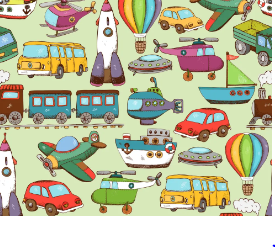
Transport
Using voices, bodies and instruments to explore different types of transport, identify and mimic transport sounds and interpret and perform a simple score.
UNIT 4
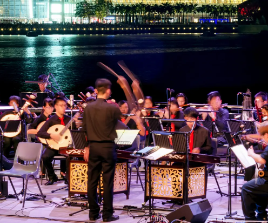
Big Band
Learning about what makes a musical instrument, the four different groups of musical instruments, following a beat using an untuned instrument and performing a practised song to a small audience.
Year 1
UNIT 1
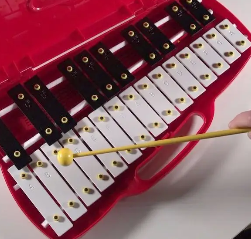
Keeping the Pulse (My Favourite Things)
Children learn to identify the difference between the pulse and rhythm of a song and consolidate their understanding of these concepts through listening and performing activities.
UNIT 2
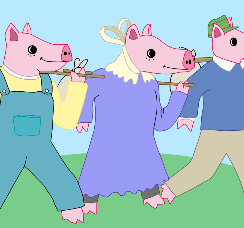
Sound Patterns (Fairytales)
Through fairy tales, children are introduced to the concept of timbre; learning that different sounds can represent characters and key moments in a story. They explore clapping along to the syllables of words and phrases before creating rhythmic patterns to tell a familiar fairy tale.
UNIT 3

Pitch (Superheroes)
Learning how to identify high and low notes and to compose a simple tune to represent a superhero.
UNIT 4

Musical symbols (Under the Sea)
Children combine all the musical concepts learnt throughout Year 1 for an underwater-themed performance incorporating instrumental, vocal and body sounds.
Year 2
UNIT 1

Call and Response (Animals)
Using instruments to represent animals, copying rhythms, learning a traditional Ghanaian call and response song and recognising simple notation, progressing to creating call and response rhythms.
UNIT 2

Instruments (Musical Story Telling)
This unit helps the children learn how events, actions and feelings within stories can be represented by pitch, dynamics and tempo.
UNIT 3
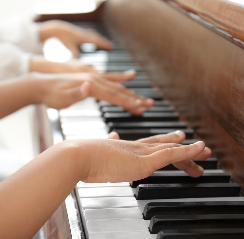
Structure (Myths and Legends)
Developing an understanding of structure by exploring and ordering rhythms.
UNIT 4
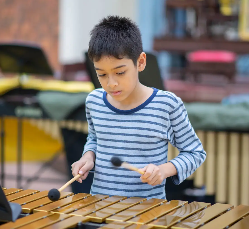
Pitch (Musical me)
Children learn to sing the song ‘Once a Man Fell in a Well’ and to play it using tuned percussion. Using letter notation to write a melody.
Year 3
UNIT 1
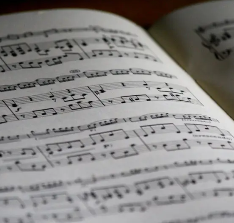
Ballads
Children learn what ballads are, how to identify their features and how to convey different emotions when performing them. Using an animation as inspiration, children carefully select vocabulary to describe the story, before turning them into lyrics by incorporating rhyming words and following the structure of a traditional ballad.
UNIT 2

Developing singing technique (Theme: the Vikings)
The children will be developing their singing technique, learning to keep in time and working on musical notation and rhythm. The unit finishes with a group performance of a song with actions.
UNIT 3
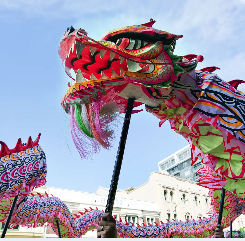
Pentatonic Melodies and Composition (Chinese New Year)
Revising key musical terminology, playing and creating pentatonic melodies, composing a piece of music using layered melodies.
UNIT 4

Traditional instruments and improvisation (Theme: India)
Children listen to a range of rag and tal music, identifying traditional instruments as well as creating their own improvisations and performing as a class.
Year 4
As part of the year 4 curriculum, during the Autumn term, the children take part in the Listen2Me programme offered by Hampshire music service. Please click on the link below to find out more.
Hampshire Music Service - Listen2Me
Autumn Term
Ukelele – Hampshire Music Service
UNIT 1

Changes in Pitch, Tempo and Dynamics (Rivers)
Children will be learning to sing in tune and in harmony with others, with developing breath control, explain how a piece of music makes them feel with some use of musical terminology and create and perform a piece with a variety of ostinatos.
UNIT 2
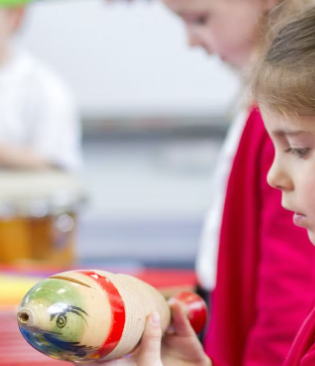
Samba and Carnival Sounds and Instruments
Children will be able to explain what samba music is and that it is mainly percussion instruments used in celebrations such as Carnival in Brazil, clap on the off-beat (the and of each beat) and be able to play a syncopated rhythm and play their rhythm in time with the rest of their group (even if they are not always successfully playing in time with the rest of the class).
UNIT 3

Adapting and Transposing Motifs (Romans)
Children will learn a new song, singing in time and in tune while following the lyrics, identify motifs aurally and play a repeated pattern on a tuned instrument and create and perform a motif, notating it with reasonable accuracy.
Year 5
UNIT 1
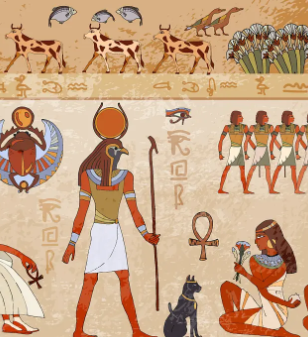
Composition notation (Ancient Egypt)
Children will identify the structure of a piece of music and match this to non-standard notation, compose and play a melody using stave notation, contribute meaningfully to the group performance and composition and use hieroglyphic notation to show the structure of their piece.
UNIT 2
 Blues
Blues
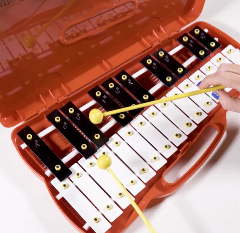
Children are introduced to this famous genre of music and its history, and learn to identify the key features and mood of Blues music and its importance and purpose. They also get to grips with the 12-bar Blues and the Blues scale, and combine these to create an improvised piece with a familiar, repetitive backing.
UNIT 3
South and West Africa
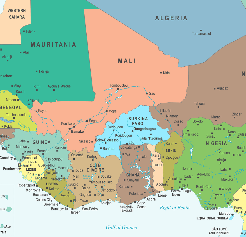
Children learn ‘Shosholoza’, a traditional South African song, play the accompanying chords using tuned percussion and learn to play the djembe. They will also learn a traditional West African drum and add some dance moves ready to perform the song in its entirety.
UNIT 4

Composition to represent the festival of colour (Theme: Holi festival)
Exploring the associations between music, sounds and colour; composing and performing their own musical composition to represent Holi, the Hindu festival of colour that celebrates the beginning of spring and the triumph over good and evil.
Year 6
UNIT 1

Dynamics, pitch and texture (Theme: Coast - Fingal’s Cave by Mendelssohn)
Appraising the work of Mendelssohn and further developing improvisation and composition skills.
UNIT 2

Theme and variations (Theme: Pop Art)
Children explore the musical concept of theme and variations and discover how rhythms can ‘translate’ onto different instruments.
UNIT 3
Baroque
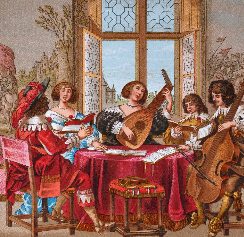
The children will be exploring the music and composers of the Baroque Period and investigating the structural and stylistic features of their work
UNIT 4

Composing and Performing a Leavers' Song
Children spend the topic creating their very own leavers’ song personal to their experiences as a class.